




Nassau · Suffolk · North & South Fork
Window Caulking & Recaulking Service on Long Island
Free on-site estimate. Licensed and insured in Nassau and Suffolk, with offices in Manhasset and Hauppauge.
Window caulk is the first line of defence against everything Long Island's climate delivers. The freeze-thaw cycling of its winters, the coastal humidity that moves off the Sound and the Atlantic, the salt-laden air that strips and dries exposed sealants faster than anywhere inland. A fresh caulk line does its job quietly and invisibly.
Prestige Window Works provides professional window recaulking throughout Nassau and Suffolk County. We remove deteriorated caulk completely, prepare the surface correctly, and apply the right sealant for the frame material and exposure conditions, not a thin bead over old caulk, not a mismatch of product to substrate.
We serve homeowners across Nassau and Suffolk County. The work is done properly so it holds through Long Island's full seasonal cycle without cracking, pulling, or washing out. One window or a full exterior to reseal before winter: call 516-908-8005 for a free on-site estimate.
4.9★649+ Google reviews
A+BBB accredited
LicensedNassau & Suffolk, fully insured
5 & 10 yrwarranties on wood and glass units
Recent jobs
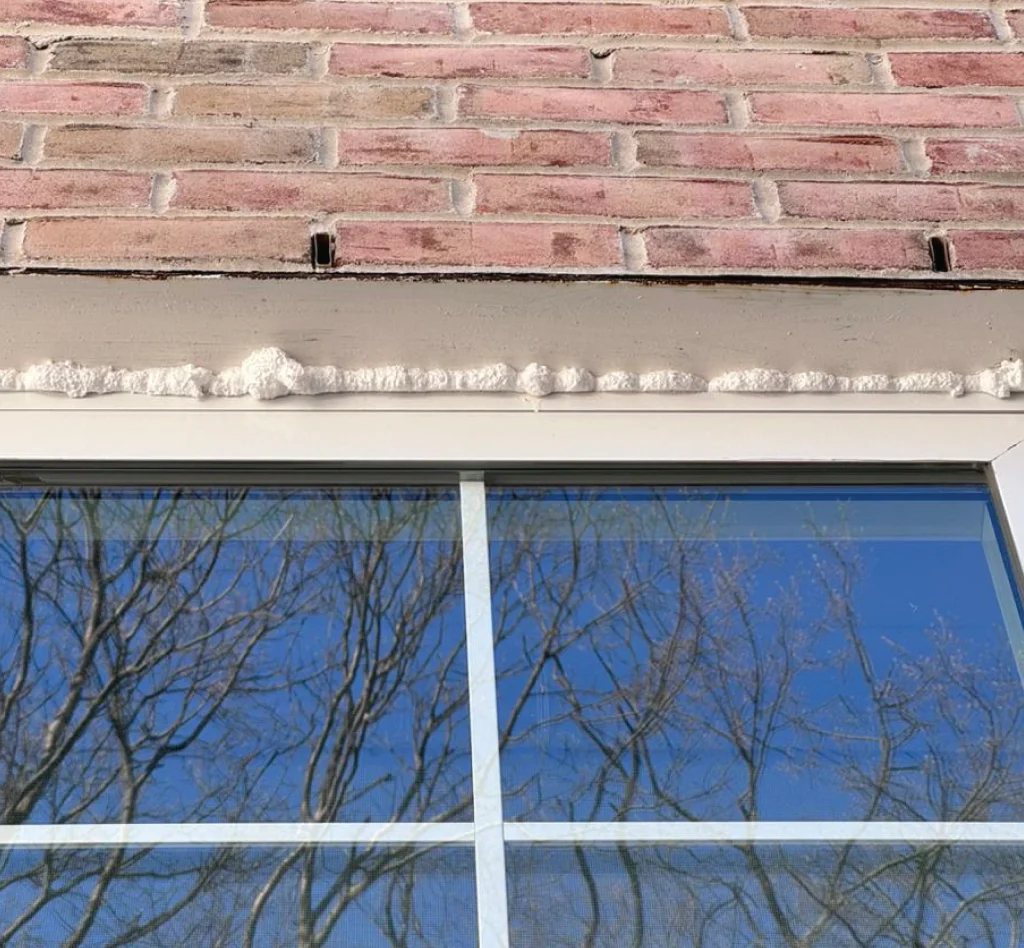
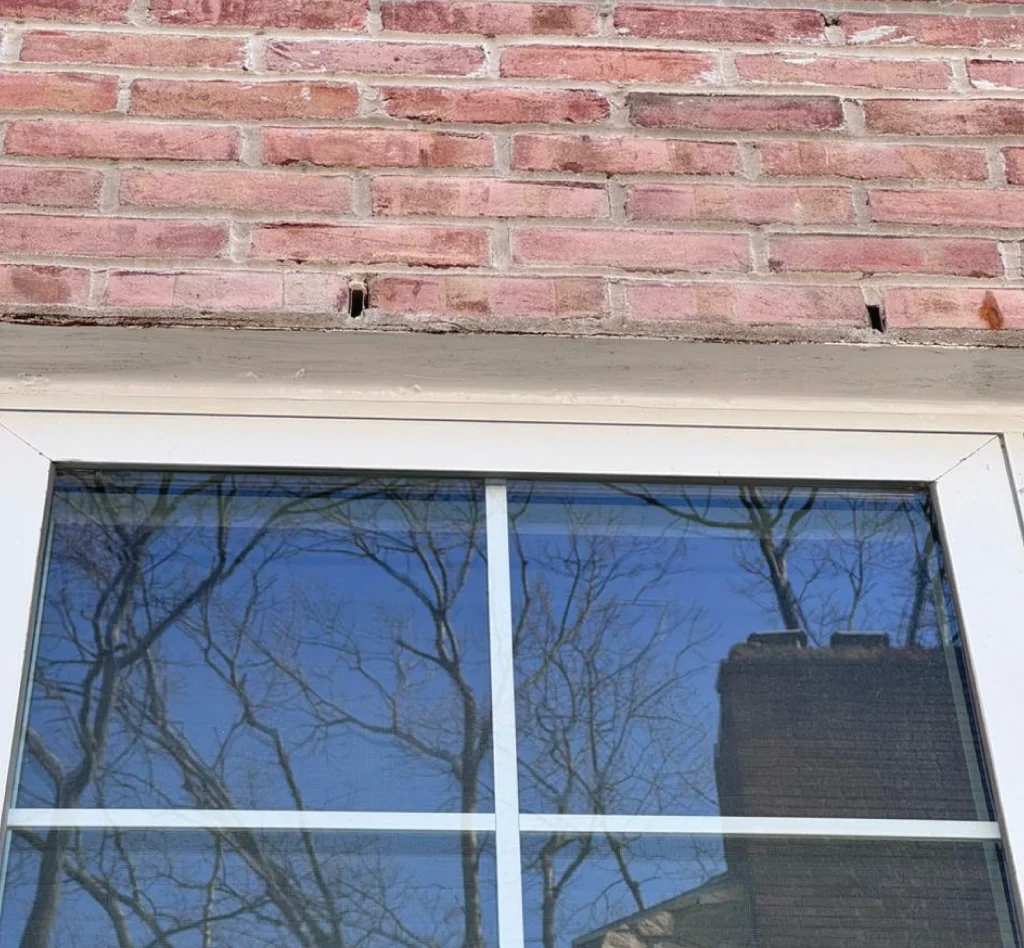
Where we do this work
All over Nassau and Suffolk, from our offices in Manhasset and Hauppauge out to the Hamptons and the North Fork.
Nassau County →
Garden City · Massapequa · Rockville Centre · Great Neck · Port Washington · Merrick
The East End →
The Hamptons, Sag Harbor, the North Fork, Greenport and Riverhead
4.9 stars from 649+ Google reviews
What homeowners say
Good services from prestige worker so professional the best service experience from this company , glad to strong recommend
 SUSAN CHAN
Had Prestige window/door repair here. They were excellent. Prompt, professional and fair priced. Couldn’t ask for more. Highly recommended Would definitely use them again
 rita zaidinski
Wonderful experience, Presitage is very knowledge and professional regarding window and door, highly recommend to all that need the help!
 Xi Verfenstein
7 Signs Your Window Caulk Needs Replacing
Window caulk fails gradually and the signs are easy to miss until the damage behind them is not. Long Island's climate accelerates every one of these failure modes.
Here is what to look for on your windows before winter arrives.
Here is what to look for on your windows before winter arrives.
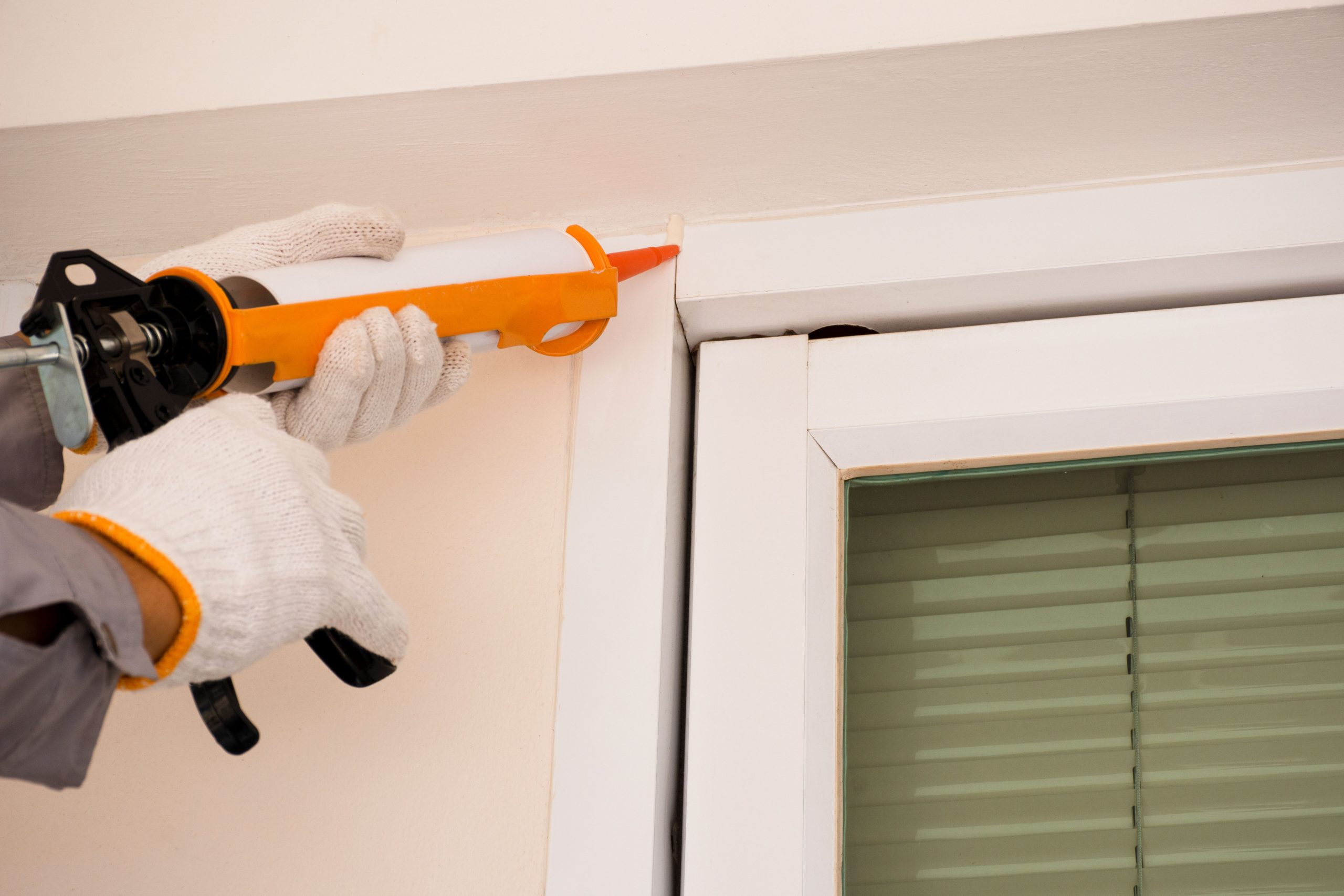
Visible Cracks
The caulk bead shows surface cracks running along its length or across it. Cracks in caulk mean the material has lost its elasticity and can no longer accommodate the seasonal movement of the frame. On Long Island, where thermal cycling is frequent and significant, cracked caulk is no longer sealing. Water enters through the cracks on every rain event and the damage accumulates below the surface where it is not visible.
Pulling Away
The caulk has separated from one or both surfaces it was bridging, i.e. the glass, the frame, the siding, or the trim. A gap between the caulk and the substrate it was bonded to is an open infiltration path even if the caulk itself looks otherwise intact. This failure mode is particularly common on Andersen and Pella wood-clad frames where the cladding and the surrounding trim have different seasonal movement rates.
Missing Sections
Sections of caulk are entirely absent: washed out, picked out, or simply never applied at key junctions. This is more common than homeowners expect on older Long Island homes where recaulking has been deferred through multiple exterior paint cycles. Any gap in the caulk perimeter, regardless of how small it appears, is a weather entry point under wind-driven rain conditions.
Discolouration
The caulk bead has darkened, turned black in patches, or shows green biological growth along its surface. Dark discolouration in caulk indicates mould or algae growth, which means the caulk has been wet and staying wet, either from failure of the seal itself or from water pooling at the joint. Caulk that has supported biological growth for a sustained period has typically degraded structurally even where it still appears bonded.
Drafts at Closed Windows
You can feel air movement at a window that is fully closed. This means the sealing system has failed somewhere around the frame perimeter, and failed caulk at the frame-to-siding or frame-to-trim junction is one of the most common causes. On Long Island's South Shore and coastal communities, winter wind loads are significant enough that even a minor gap in the caulk perimeter produces a noticeable draft on a cold day.
Water Stains
Interior water staining on the window reveal, the sill, or the wall below the window indicates water infiltration through the frame perimeter. Caulk failure at the window head or side jambs allows wind-driven rain to enter the wall cavity before it appears as a visible stain, meaning the damage is always older and more extensive than the stain itself suggests. This is closely related to the rotten window repair calls we receive from Long Island homeowners.
Hardened Bead
The caulk is still in place and appears intact but has become completely rigid, it does not flex at all when pressed. Properly functional caulk retains some elasticity throughout its service life. A caulk bead that has hardened completely has lost the flexibility it needs to accommodate frame movement and is cracking internally even if the surface still looks sound. This failure mode is especially common on Marvin and JELD-WEN wood window frames where the wood movement cycle is pronounced.
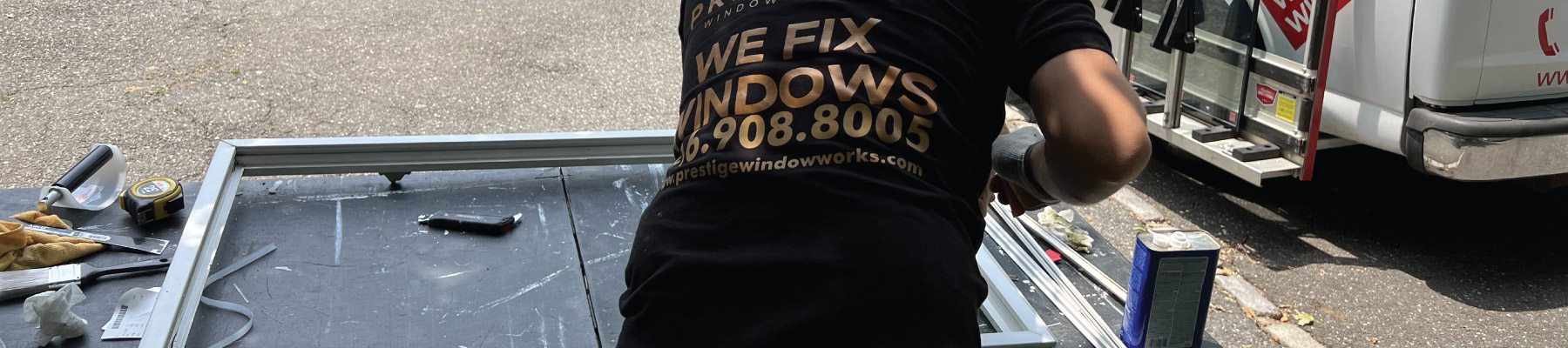
What We Recaulk
Window recaulking is not a single task, it is a systematic assessment and sealing of every joint and junction in the window system where the seal has deteriorated. We address all of the following:
Frame-to-siding perimeter: the joint running around the full exterior perimeter of the window frame where it meets the surrounding siding. This is the primary weather exclusion junction on any window and the most common site of caulk failure. We remove all old caulk completely, clean the substrate, and apply new caulk appropriate for the siding material, whether vinyl, cedar, stucco, or fiber cement.
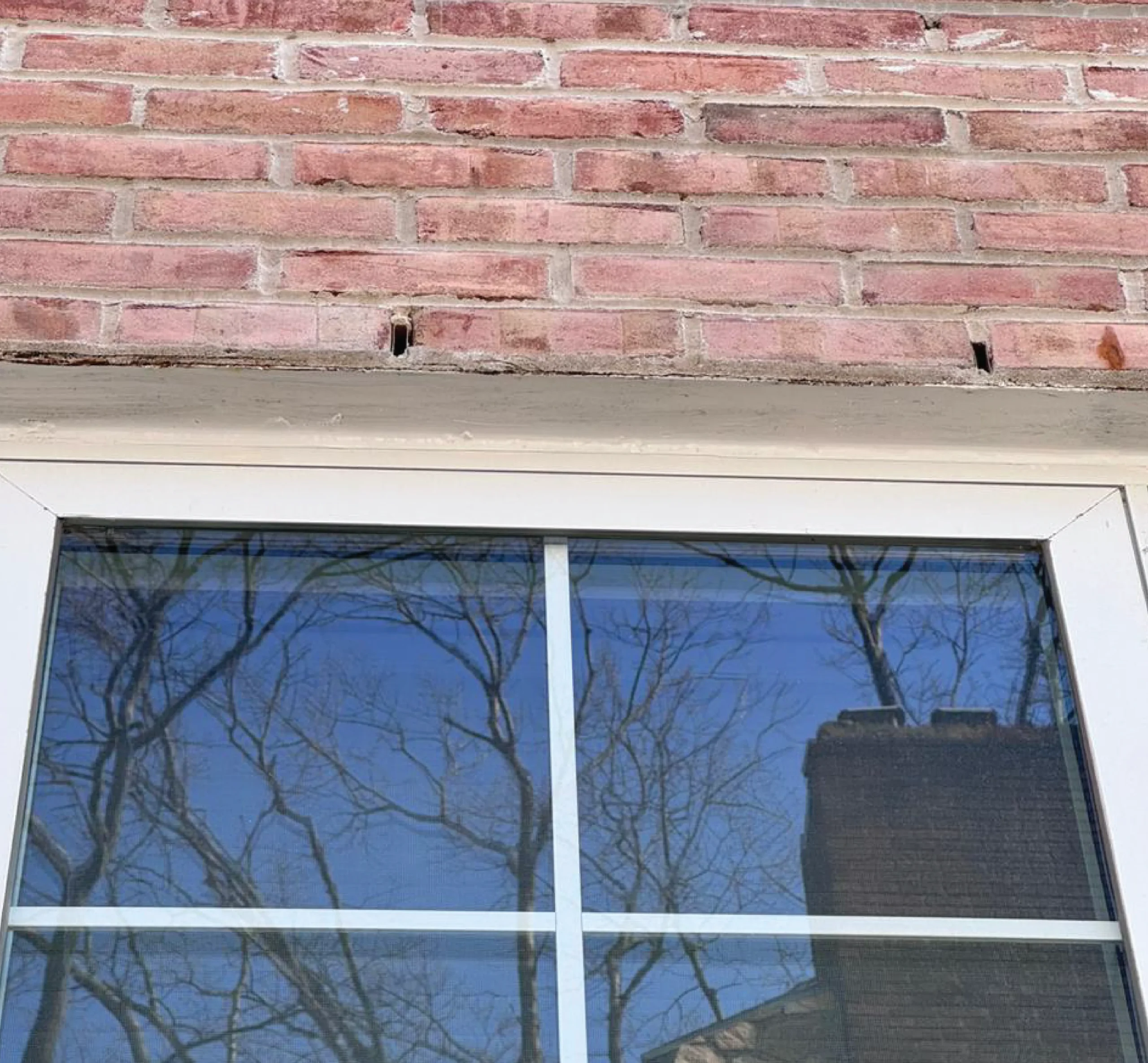
Frame-to-brick or frame-to-masonry: windows set into brick or stone veneer require a backer rod and flexible sealant at the frame perimeter rather than standard caulk, because the differential movement between the masonry and the window frame is greater than caulk alone can accommodate. We specify and apply the correct system for masonry surrounds throughout Long Island's older brick and stone-clad housing stock.
Sill-to-frame joint: the horizontal junction at the base of the window where the sill section meets the main frame. Water running down the glass and frame face collects here first. It is consistently the first joint to fail on double-hung windows and casement windows alike, and the first place we inspect.
Window head and trim joints: the horizontal joint at the top of the window frame and the joints at the trim-to-siding interface on all four sides. Head joint failures allow water to travel behind the trim and enter the wall cavity above the window before any interior staining appears at sill level.
Door frame perimeters: entry and patio door frames require the same perimeter caulking attention as windows. Therma-Tru fiberglass entry doors are the most common brand on Long Island new construction and their frame-to-siding perimeter caulk fails on the same interval as window caulk in the same exposure conditions.
Sidelight and transom perimeters: the individual panel junctions within multi-component entry systems. These narrow joints are frequently missed during general maintenance repaints and accumulate years of caulk layers that eventually need full removal and replacement to seal correctly.
Frame-to-siding perimeter: the joint running around the full exterior perimeter of the window frame where it meets the surrounding siding. This is the primary weather exclusion junction on any window and the most common site of caulk failure. We remove all old caulk completely, clean the substrate, and apply new caulk appropriate for the siding material, whether vinyl, cedar, stucco, or fiber cement.
Frame-to-brick or frame-to-masonry: windows set into brick or stone veneer require a backer rod and flexible sealant at the frame perimeter rather than standard caulk, because the differential movement between the masonry and the window frame is greater than caulk alone can accommodate. We specify and apply the correct system for masonry surrounds throughout Long Island's older brick and stone-clad housing stock.
Sill-to-frame joint: the horizontal junction at the base of the window where the sill section meets the main frame. Water running down the glass and frame face collects here first. It is consistently the first joint to fail on double-hung windows and casement windows alike, and the first place we inspect.
Window head and trim joints: the horizontal joint at the top of the window frame and the joints at the trim-to-siding interface on all four sides. Head joint failures allow water to travel behind the trim and enter the wall cavity above the window before any interior staining appears at sill level.
Door frame perimeters: entry and patio door frames require the same perimeter caulking attention as windows. Therma-Tru fiberglass entry doors are the most common brand on Long Island new construction and their frame-to-siding perimeter caulk fails on the same interval as window caulk in the same exposure conditions.
Sidelight and transom perimeters: the individual panel junctions within multi-component entry systems. These narrow joints are frequently missed during general maintenance repaints and accumulate years of caulk layers that eventually need full removal and replacement to seal correctly.
Long Island Exposure
Caulk manufacturers specify service lifespans that are based on average installation conditions, a moderate climate, consistent temperatures, standard residential exposure. Long Island is not that. The island's position surrounded by water on three sides creates a specific set of degradation conditions that shorten the effective life of exterior caulk well below what the product label suggests.
The freeze-thaw cycle is the primary driver. Long Island winters produce repeated transitions across the freezing point, not one sustained freeze, but dozens of daily cycles in January and February where frame materials expand and contract. Every cycle works the caulk joint slightly. Over a season, a sound bead develops micro-cracks. Over two or three seasons, those micro-cracks become open channels. The caulk looks intact from three feet away and is no longer sealing from three inches.
Coastal exposure compounds this. Communities like Atlantic Beach, Point Lookout, and Sag Harbor experience salt-laden air that attacks the surface chemistry of silicone and acrylic sealants, drying them out and reducing their flexibility faster than inland locations. A caulk joint that would hold for eight years on a Nassau County interior street may fail in four on a South Shore waterfront.
The freeze-thaw cycle is the primary driver. Long Island winters produce repeated transitions across the freezing point, not one sustained freeze, but dozens of daily cycles in January and February where frame materials expand and contract. Every cycle works the caulk joint slightly. Over a season, a sound bead develops micro-cracks. Over two or three seasons, those micro-cracks become open channels. The caulk looks intact from three feet away and is no longer sealing from three inches.
Coastal exposure compounds this. Communities like Atlantic Beach, Point Lookout, and Sag Harbor experience salt-laden air that attacks the surface chemistry of silicone and acrylic sealants, drying them out and reducing their flexibility faster than inland locations. A caulk joint that would hold for eight years on a Nassau County interior street may fail in four on a South Shore waterfront.
Window Recaulking in Nassau and Suffolk County
We provide window recaulking throughout Long Island from our Manhasset and Hauppauge offices.
Our Manhasset office serves Nassau County, including Great Neck, Port Washington, Oyster Bay, Garden City, Long Beach, and Atlantic Beach.
Our Hauppauge office serves Suffolk County, including Huntington, Northport, Smithtown, Bay Shore, Patchogue, and Sag Harbor.
For homeowners searching for window recaulking near me on Long Island, call 516-908-8005 to schedule a free estimate. We confirm coverage for your location and schedule within 1–3 business days throughout Nassau and Suffolk County.
Our Manhasset office serves Nassau County, including Great Neck, Port Washington, Oyster Bay, Garden City, Long Beach, and Atlantic Beach.
Our Hauppauge office serves Suffolk County, including Huntington, Northport, Smithtown, Bay Shore, Patchogue, and Sag Harbor.
For homeowners searching for window recaulking near me on Long Island, call 516-908-8005 to schedule a free estimate. We confirm coverage for your location and schedule within 1–3 business days throughout Nassau and Suffolk County.
THE MOST POPULAR QUESTIONS
How often should windows be recaulked on Long Island?
General guidance for most climates suggests recaulking every 5–10 years. On Long Island, the correct interval depends on location and exposure. Properties in inland Nassau County with standard vinyl or aluminum windows typically fall in the 5–8 year range. Properties on or near the coast, i.e. the South Shore barrier island communities, waterfront North Shore properties, or East End harbour communities, experience accelerated caulk degradation from salt air and should be inspected more frequently, often every 3–5 years. We assess condition on-site and tell you honestly whether recaulking is needed or can wait.
Can new caulk be applied over old caulk?
Not correctly. Applying new caulk over existing caulk bonds to the surface of the old material rather than to the substrate itself. Old caulk that is already pulling away from one surface will pull the new caulk with it when it fails further. Proper recaulking requires complete removal of the existing bead, surface preparation, and then application of new material to a clean substrate. Jobs that skip this step look correct initially and fail within one to two seasons.
How much does window recaulking cost on Long Island?
Cost depends on the number of windows, the perimeter length of each frame, the substrate materials, and the extent of preparation required. Properties with multiple layers of accumulated old caulk require more removal time than those receiving their first recaulk. We provide a written quote at the free estimate visit, there are no surprises on the invoice. Call 516-908-8005 to schedule.
What type of caulk is best for exterior windows?
For most Long Island residential applications, 100% silicone or siliconized acrylic caulk is appropriate for glass-to-frame and frame-to-siding junctions. Frame-to-masonry joints require a more flexible polyurethane or hybrid sealant with a backer rod. The product choice depends on the substrate materials involved, applying the wrong product type produces a joint that looks correct but fails prematurely because the material's chemical compatibility with the substrate is wrong. We specify the correct product for each joint type during the estimate visit.
Is window recaulking the same as window weatherstripping?
No, they address different parts of the sealing system. Caulk seals the static joint between the window frame and the surrounding structure, the connection that does not move. Weatherstrip seals the moving contact between the operable sash and the frame, the connection that opens and closes. Both need to be intact for a window to seal correctly. If a draft persists after recaulking, deteriorated weatherstrip is usually the remaining cause. Our window adjustment service covers weatherstrip replacement as part of a complete window sealing assessment.
Does recaulking help with energy efficiency?
Yes, air infiltration through failed frame perimeter caulk is one of the most common causes of high heating bills in Long Island homes, particularly in the older housing stock of Nassau County where original windows may never have had their perimeter caulk refreshed. A correctly recaulked window perimeter eliminates the continuous air leakage path that forms as caulk cracks open over time. The improvement is most noticeable on windy winter days and on the South and west-facing elevations of the home where wind-driven air pressure is highest.
Are you supposed to caulk around your windows?
Yes, around the outside of the frame. On Long Island, failed caulk is how moisture, cold air and salt-laden wind get in.
Can I put new caulking on top of old caulking?
No. New caulk over cracked caulk fails quickly. We cut out the old bead, clean the joint and apply a paintable exterior sealant.
What happens if you don't caulk windows?
Water gets behind the trim and into the sill, which leads to rot, drafts and higher heating bills.
How much does it cost to caulk outside windows?
We price recaulking per window or per house after seeing the joints; it's one of the least expensive ways to protect wood windows.